How to Run Quarters Coverage in College Football 27 (Match Cover 4, Explained)
A lot of guys call Quarters thinking they are just running 4 deep zones trying not to get burned. Then the seam splits them down the middle and they wonder what happened. Here's the deal: Quarters is match coverage. Four defenders over the top, and they lock onto routes the second the receivers declare.
Call it as your every-down base in a 2x2 set. It covers the verticals and it drops two extra hats into the run fit, which is exactly what you want when stopping the run is the whole job.
If you are shaky on what match even means, start with how match coverage works, then come back here.
What Quarters actually is
Four deep defenders, each one responsible for a quarter of the field. Two corners outside, two safeties inside. Underneath them you have your nickel (the apex) and your linebackers handling the short stuff and the run fits.
The match part is what makes it hold up. Your guys read first, then they pattern-match. A defender passes off one receiver and picks up another by rule, so a bunch or a stack cannot rub anybody open. You get man-tight coverage with eyes on the quarterback and help over the top.
That is why real defenses live in it on early downs, and it is why it is the smartest 2x2 base you can call in this game.
Who's got what in 2x2
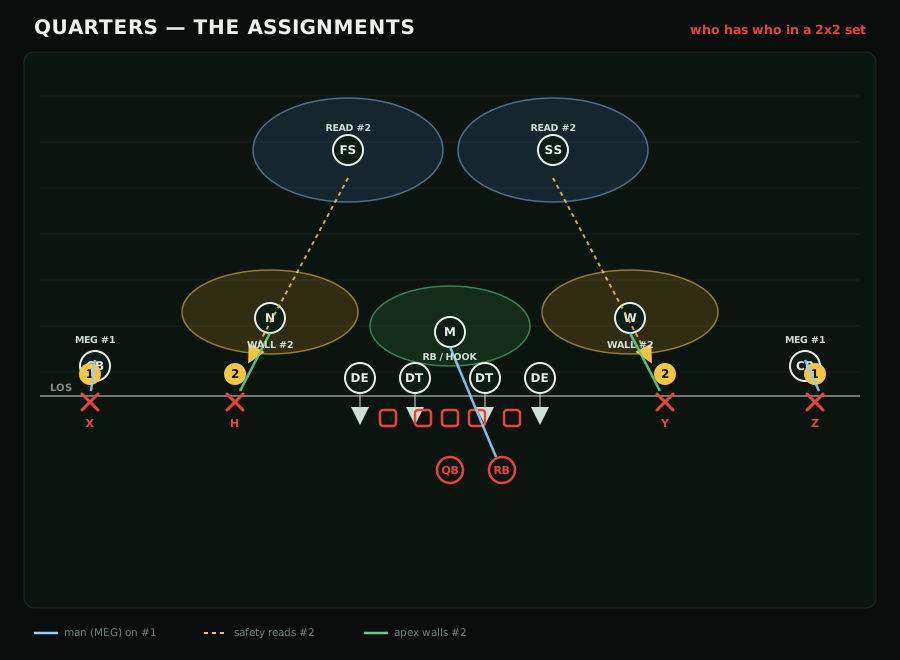
Picture one side of a 2x2 set. Two receivers, three defenders over them: a corner, a safety, and the apex.
The corner takes #1, the outside receiver. He plays him man-style with outside leverage, which means he lines up on #1's outside shoulder so any inside break has to come back toward his help, and he carries #1 deep on every vertical. That is the MEG technique, Man Everywhere he Goes, the MEG #1 you see on the diagram. If #1 cuts back inside on a short route, the corner can pass him off and jump the next threat.
The safety reads #2, the inside receiver. This is the most important job in the whole coverage. If #2 runs vertical up the seam, the gap between the corner and the safety right up the hash, the safety carries him man down the field. If #2 breaks underneath or out to the flat, the safety comes off and robs #1, jumping over the top to help on the outside vertical.
The shorthand the safety lives by: carry two, rob one.
The apex is your nickel, the guy lined up between the slot and the box. He walls #2, which just means he gets his body in the slot's inside path so #2 cannot release clean across the middle, and he owns the quick flat and curl underneath. He is your first trigger on the run too. That is the WALL #2 on the diagram.
In the middle, the Mike linebacker carries the back if he leaks out of the backfield and sits in the short hook zone until then. That is the RB / HOOK tag.
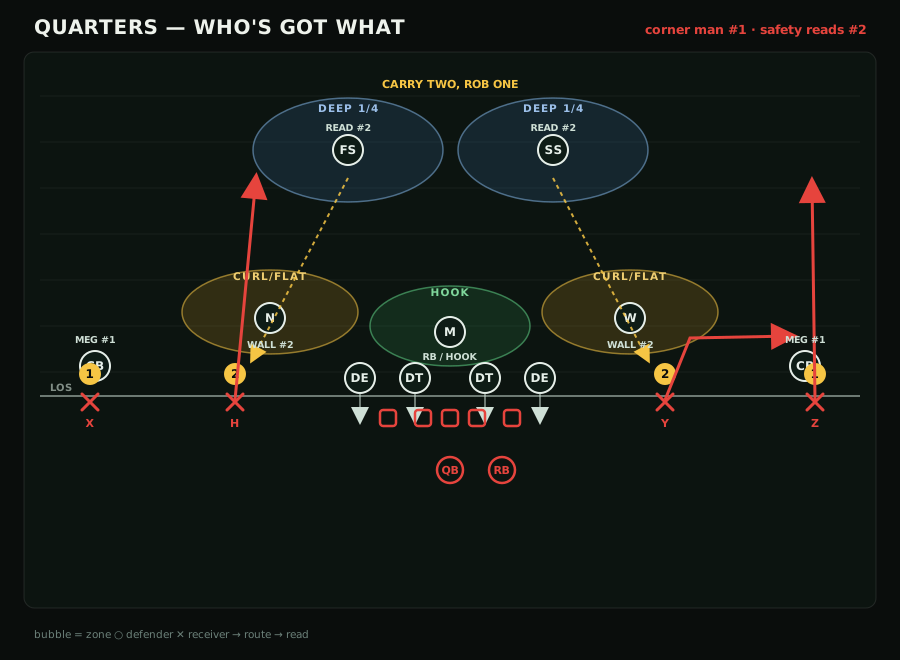
Here's the part that wins you games. Because both safeties are reading #2, the moment they see run they trigger downhill as extra tacklers. Quarters is one of the best run-support coverages in the game, and if you cannot stop the run you are cooked. This is the coverage that lets you load the box without leaving the back end naked.
The checks that matter
A 2x2 set is the easy part. The coverage gets tested when the offense bunches up or floods three to a side. That is where the checks come in. A check is just a built-in rule for how your guys split a specific look. You do not draw it up. The coverage already knows what to do.
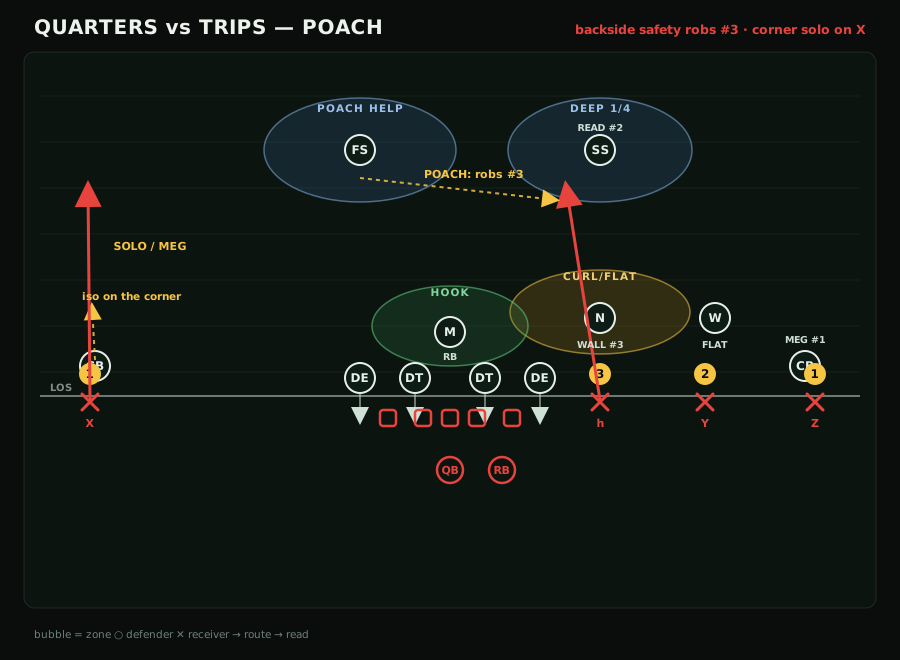
Trips (3x1): the Poach check. Three receivers to one side puts the inside seam in danger. Poach sends the backside safety across the formation to rob #3's vertical, while your backside corner locks the lone receiver in man. Now the trips side has its help and the single receiver is still covered.
Bunch: the Box check. A tight bunch is built to rub your man defenders into each other. Box answers it by handing each defender an area around the bunch, so they pass off the crossers and nobody gets picked. You have had Box in the menu for a few years now, so it should feel familiar.
Empty: the Stump check. Five wide with no back means there is no extra hat anywhere, so everybody has to be right. Stump is the empty answer, matching across the formation and running the bunch rules to the three-receiver side. Drill this one in practice mode before you trust it online.
Four to one side: get your help set. When they dump four receivers to one side, you are matching across the whole formation and asking your linebackers to run. Recognize it before the snap and slide your help to the three-receiver side so you are not scrambling after the ball is out.
Where it gets beat
No coverage is free, and Quarters has two leaks you will feel right away.
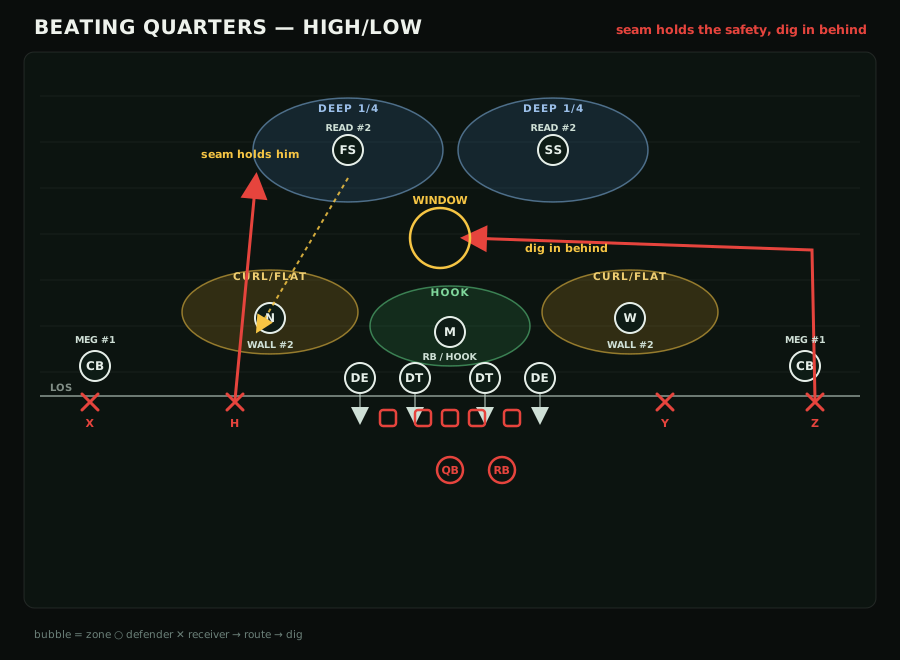
The first is the high-low on the safety. The offense sends #2 vertical up the seam to occupy him, then brings a dig or a deep crosser in behind from the other side. The safety is busy carrying that seam, so he cannot squeeze the crosser too, and a window opens over your linebackers. The fix is to user that safety and play the route honestly.
The second is the quick game underneath. Your corners are playing off with outside leverage, so the hitch, the quick slant, and the bubble are open right now, before the match even triggers. That is the trade Quarters makes. It takes away the deep ball and gives up the five-yard stuff. Live with the checkdowns, and press your corner when you want to wall off the slant.
One more. If your Poach is not set against trips, that lone backside receiver is on an island with your corner. Good offenses go hunting for that matchup, so get the call made pre-snap.
Run it on the sticks
Set your Quarters match principles in coaching adjustments and save the whole thing as a custom adjustment macro, so you can call it in a couple of button presses once you are in the game. Set it in the main menu and it carries every week.
The single most important habit: user the safety to the passing strength, the trips or bunch side. The seam is the leak, and the seam is exactly what that safety is reading. Carrying #2 yourself closes the biggest window in the coverage.
Honest flag, same as everywhere on the site right now. This is built off last year's game, so treat the exact check menu as our read until College Football 27 is actually out. The concept holds and the football is real. We will confirm the check names the day it drops.
What to run tonight
Call Quarters in your 2x2 base. User the safety over #2 to the passing strength and carry that seam yourself. If they start picking you apart underneath with hitches and slants, that is the coverage doing its job, so squeeze it by pressing your corners and sinking the apex on the quick stuff.
And when they go trips, get your Poach set before the snap. The lone receiver backside is the first place they look. Go live in practice mode with it for ten minutes, then take it online and make somebody throw it short all night.