How to Run Coverage on Defense in College Football 27 (Match and Man, Explained)
For years, playing defense in these games meant picking a play and praying somebody was covered. College Football 27 finally lets you run real coverage, the same stuff actual teams call on Saturdays. And if you have never been totally sure what the difference between man and zone even is, good. This one is built for you.
Quick version: there are three ways to cover receivers, and match coverage is the new star of the show in CFB 27. Match is a zone that turns into man once it reads the routes, so it covers tight without your defenders tripping over each other. Below we teach each one like you are on the couch next to us, then walk through the new checks you can actually call.
We broke down every defensive change in the full defense rundown. This one zooms all the way in on coverage.
Start here: the three ways to cover
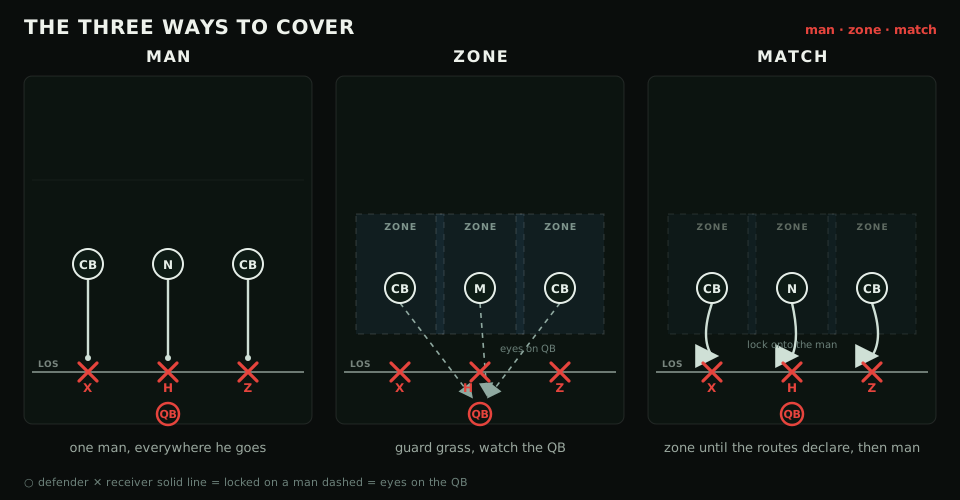
Every coverage in football is built on one of three ideas. Learn these and the rest is just labels.
Man coverage. A defender picks one receiver and follows him everywhere. It is tight and aggressive, and it travels with motion. The catch is that when offenses stack guys on top of each other or bunch them together, your defenders can get rubbed off or run smack into each other.
Zone coverage. A defender owns an area of grass, keeps his eyes on the quarterback, and jumps whatever comes into his window. It is safer and it lets you see the play develop. The soft spot is the throw into the seams between zones.
Match coverage. This is the one to learn. It starts out looking like zone, then your defenders lock onto receivers like man once the routes declare themselves. You get man-tight coverage with zone eyes and help over the top. Real teams live in it, and CFB 27 is leaning all the way in.
Why match is the big deal this year
Here is the problem match solves. Modern offenses stack and bunch receivers on purpose, to create natural pick routes and free releases. Pure man gets picked. Pure zone hands them the easy stuff underneath.
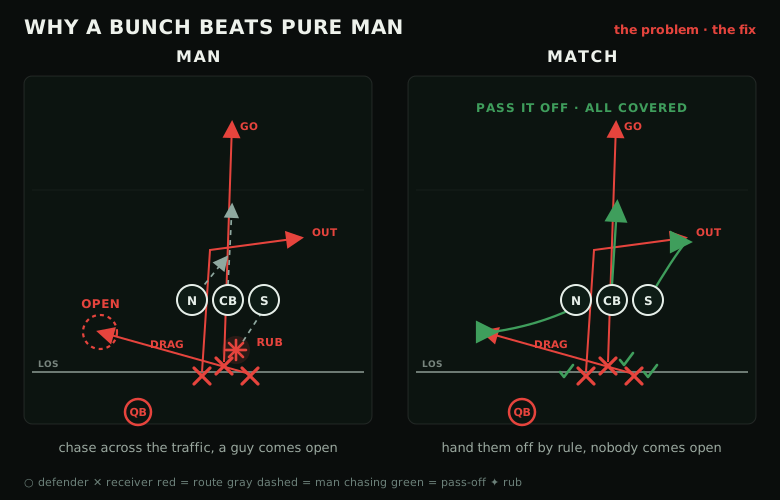
Match reads the route combination and passes receivers off by rule, so somebody always ends up on the right guy. EA expanded the match menu this year, adding checks across Cover 3 Match, Quarters, Palms, and Cover 6. That is a big jump from a couple of years ago, when a bunch check basically meant playing quarters and getting Box.
One honest flag before we go further. This is all from EA's pre-release breakdown. The names and the exact behavior below are our read of it, and we will confirm and go deeper one coverage at a time once the game is actually out. Teach yourself the concepts now and hold the specifics loosely.
What a "check" is, and the ones worth knowing
A check is just a built-in rule for how your defenders split up receivers against a specific look. You do not draw it up. The coverage already knows what to do when it sees a bunch or a trips set. Here is the menu in plain terms.
Man answers for stacks and bunches:
- Combo and Triangle. Your defenders trade off who takes the inside breaker and who takes the outside breaker, so they hand receivers to each other and never collide. Combo is the version with one deep safety. Triangle is the two-safety version with help over the top. If you want the simple one, run Triangle and user that safety.
- Top Hat. Against a stack, your two defenders switch who takes the front man and who takes the back man, which dodges the rub the offense is trying to set.
Match checks (zone that becomes man):
- Box. The base bunch check you have had for a couple of years. Each defender owns a direction around the bunch.
- Bingo. Think of it as a smarter Box. If the outside receiver runs underneath, you stay in Box. If he pushes vertical, it morphs to carry the deep stuff. This one comes straight from Saban's Alabama tape, which tells you EA is taking this seriously.
- Skate. A bunch answer out of Cover 3, so Cover 3 can hold up against a bunch now too.
- Skinny. A Cover 3 answer to trips. The backside corner carries the lone receiver while the rest of the defense rotates to the trips side.
- Stress. Built to handle four verticals, which is the throw match coverage usually struggles with. It takes away the easy verticals and forces the hardest one.
- Solo and Solo Cut. Play your normal coverage to one side and lock man on the back side. The Cut version peels a safety off to rob crossing routes.
If half those words are new to you, that is fine. You do not need all of them on day one. When you do want all of them, the full match coverage glossary defines the game's whole coverage menu in plain English, one page, every term.
How to actually run it in game
The match stuff lives in your coaching adjustments, under your coverage's match principles, things like Cover 3 Match, Quarters, Palms, and Cover 6. You set how aggressive or conservative you want it, then you can save the whole setup as a custom adjustment macro and call it in a couple of buttons once you are in the game. Set it in the main menu and it carries every week.
The one real unknown: we do not yet know how the game lets you choose between two checks off the same coverage, like Box versus Bingo. It might be a toggle, a separate play, or an automatic check the defense makes for you. That is the first thing we will test the day the game is out.
The skeptic's note
Same caution we gave on the defense piece applies double here. EA hypes defense every single year, and sometimes the smart-sounding coverage stuff turns out to be a fresh coat of paint. So keep the salt handy.
The reason for some real optimism: match coverage already works in these games. Quarters matching and palms have been in for years and they hold up when you know the rules. These new checks are basically if-then instructions, so there is no reason the same logic cannot run. Promising on paper. The season will tell us if it holds.
What to run tonight
Do not try to memorize that whole menu. Pick one match coverage, a Cover 3 Match or Quarters, and learn a single bunch check off it. Then spend five minutes training your eyes to spot a bunch or a trips set before the snap, because the check only helps if you recognize the look that calls for it.
And if you want the other side of this, the same coverages from the offense's point of view, read how we attack them in beating Cover 3 and beating Cover 2. Knowing how they get beat is half of knowing how to run them.