Every Match Coverage Term in College Football 27, Explained (MEG, MOD, and All the New Checks)
Match coverage is zone that turns into man. Your defenders read routes with their eyes on the quarterback, then lock on by rule. College Football 27 built its whole defensive identity around that idea, with a named check for every formation that used to give you problems, which is why your menu is suddenly speaking a language nobody taught you.
Use this page like a dictionary. Skim to the word you need, then go call it. If coverage itself is still new, start with the coverage primer. This page is the deep end of that pool.
One flag up top, played once so we do not have to repeat it under every entry. EA has said Madden gets the full check menu while College gets the basics plus a few more options, so a name or two below may not ship on the college side. Where EA spelled out exact behavior, we state it plain. Where they left it vague, we define the real football concept and tag the game behavior as our read. We confirm every name on this page the day the game is out.
The six techniques: how one defender plays a man
Before the checks make sense, you need the six words that describe how one defender handles one receiver. Every check on this page is these verbs rearranged.
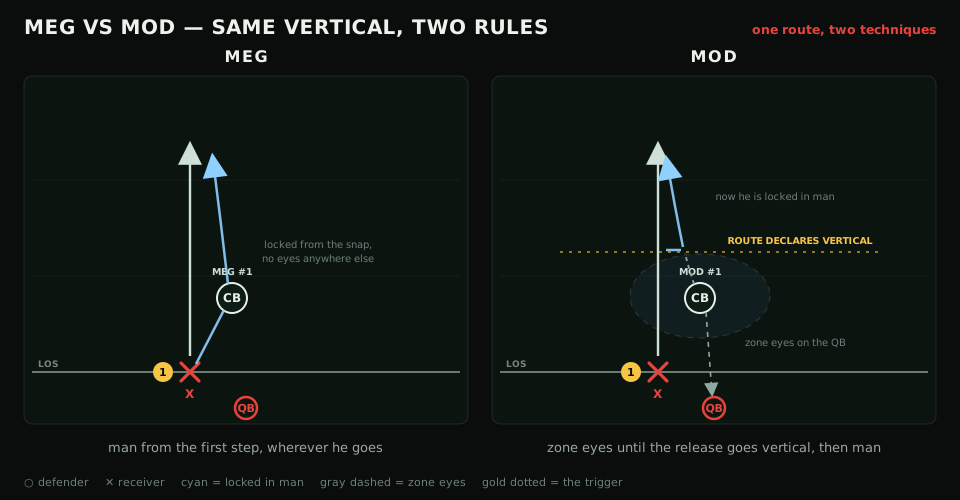
MEG (Man Everywhere he Goes)
What it is: True man inside a match call. The defender locks his receiver at the snap and follows him anywhere on the field, no passing off, no peeking at the quarterback.
Call it when: You trust a corner one on one and want a receiver erased. Skinny Meg and Solo are built on this technique.
It gets roasted by: Rubs, stacks, picks, and crossing traffic. A locked defender has no help and no warning.
The tip: Save it for your best corner against their iso receiver, and keep him out of bunches.
MOD
What it is: The expansions vary (man on demand, man only deep), so learn the rule: zone eyes on the quarterback until the receiver releases vertical, then locked on in man.
Call it when: You want verticals covered tight while the defender keeps zone eyes on the quick game underneath.
It gets roasted by: Switch releases and slow double moves that muddy whether the route ever declared vertical.
The tip: Think of MOD as the base setting and MEG as the same dial turned all the way to man.
Wall
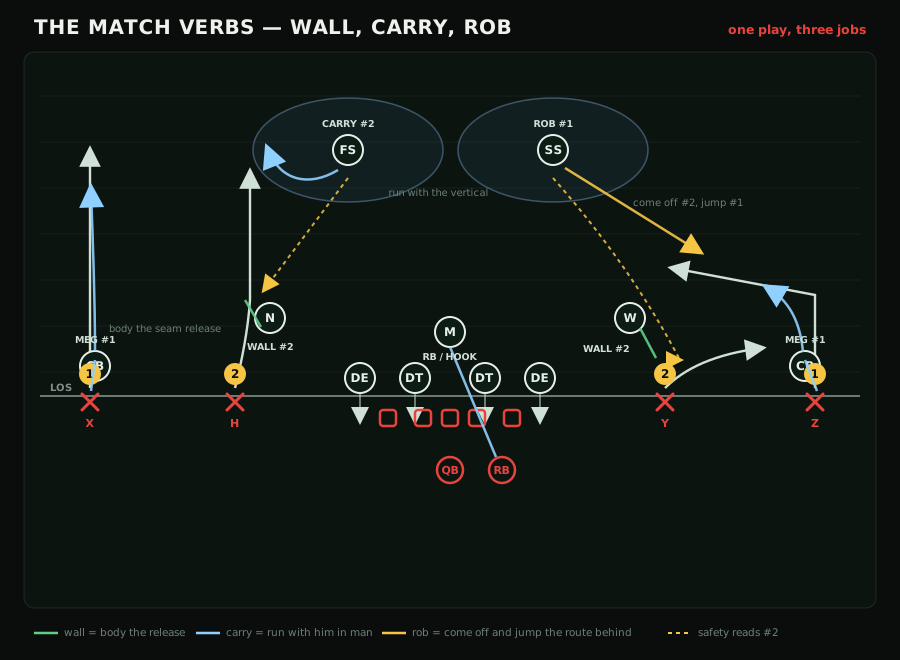
What it is: An underneath defender plants himself in the receiver's inside path so there is no clean release across the middle. It happens early, right off the line.
Call it when: Always, by rule. The nickel walls #2 or #3 in basically every match call.
It gets roasted by: Speed working outside, away from the help. Wheels and quick outs break away from the wall's inside leverage.
The tip: If the seam keeps splitting you, the wall is the job that went missing.
Carry
What it is: A deep defender runs with a vertical route in man once it climbs past the underneath coverage. The safety reading #2 carries the seam, the corner carries the fade.
Call it when: By rule again. Carry is the defense's answer to four verticals being legal on every snap.
It gets roasted by: The high-low. One vertical occupies the carry, then a dig breaks in behind it. The picture is drawn in the Quarters breakdown.
The tip: The seam is the throw that hurts, so user the safety doing the carrying.
Rob
What it is: A defender comes off his first read and sits on the route behind it. The classic version: #2 breaks short, so the safety leaves him and robs #1's dig or post.
Call it when: You are facing crosser-heavy and post-heavy offenses. The rob turns their favorite throws into picks.
It gets roasted by: Four verticals. Everybody goes deep, so there is nothing to rob and the robber has to turn and carry.
The tip: A free safety robbing the middle is the best user job in the game.
Trap
What it is: The corner reads #2 and pounces the moment he breaks to the flat, while the safety takes #1 over the top. This is the engine inside Palms, which coaches also call 2-Read.
Call it when: The trips side lives on quick outs and smash.
It gets roasted by: The out-and-up. Fake the flat, then wheel up behind the corner who just jumped it.
The tip: Trap toward the quick-game side and keep an honest call backside.
The checks: find your formation first
A check is a built-in rule for how the secondary splits up a tough formation. The coverage already knows what to do, your job is recognizing the look that calls for it. EA says these run across Cover 3 Match, Quarters, Palms, and Cover 6. The fastest way through this section: figure out what formation is staring at you, then jump to its group. Trips answers, bunch and stack answers, backside iso answers, and the escape hatches when you want out.
Trips answers (3x1)
Solo
What it is: The backside corner locks the lone receiver in MEG, which frees the backside safety to help elsewhere. In the real call that help robs the #3 seam, the job coaches call Poach, the name we used in the Quarters post.
Call it when: Trips with a vertical threat at #3, which is most trips.
It gets roasted by: The iso. Your corner is on an island with zero help.
The tip: Know your corner's matchup before you call it, because the offense already does.
Solo Cut
What it is: Solo's flip side. EA's rule: the safety takes the lone receiver's short inside-breaking routes, which frees the corner to help away from the iso side.
Call it when: The backside receiver lives on slants and shallow ins underneath your soft corner.
It gets roasted by: Our read: a slant-and-go aimed right where the safety and corner trade jobs.
The tip: Treat Solo and Solo Cut as one decision. Pick who you want freed up, the safety (Solo) or the corner (Cut).
Stubbie
What it is: The corner locks #1 in man while the nickel, the safety, and an underneath defender split #2 and #3 between them by route.
Call it when: Trips with an alpha #1 outside and quick game inside. The inside pair gets swarmed and your corner never leaves his man.
It gets roasted by: Double moves on the locked corner. He owns the island all night.
The tip: If #1 keeps winning short anyway, that is exactly what Stump is for.
Stump
What it is: Stubbie with better protection against #1's short game. The lock on #1 stays, and the defense keeps help ready to jump the hitches and slants offenses throw at a locked corner.
Call it when: You called Stubbie and they answered with quick hitters to #1 all drive.
It gets roasted by: Our read: that help has to come from somewhere, so the middle gets thinner.
The tip: Lock first with Stubbie. Add the help when the short stuff actually starts to hurt.
Bunch and stack answers
Box
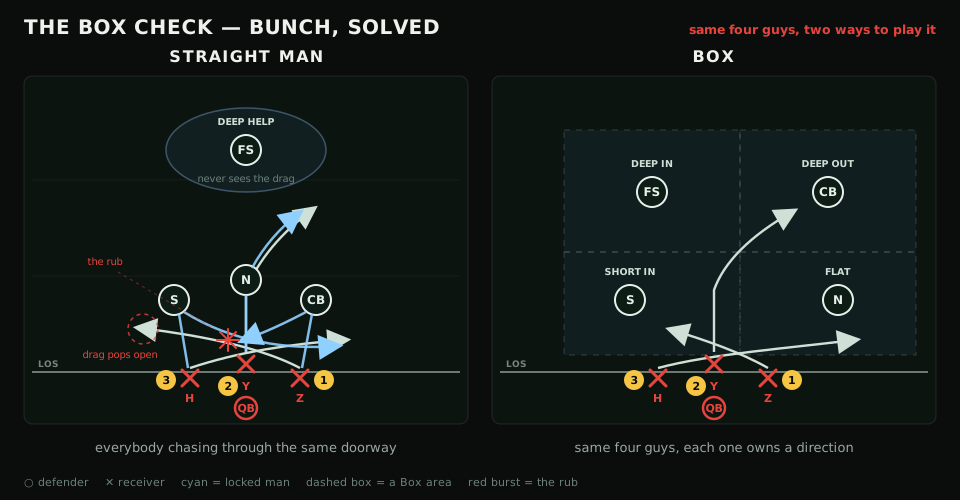
What it is: Every defender around the bunch owns a direction: deep outside, deep inside, flat, short inside. Routes get handed to whoever owns the space they break into.
Call it when: Tight bunch. The rub routes that wreck man coverage turn into simple handoffs.
It gets roasted by: Verticals out of the bunch that stretch the areas, and option routes that sit down in the seams between them.
The tip: This is the first check to learn. It has been in these games for years and it still works.
Bingo
What it is: Box with one special rule for the outside corner. If #1 stays outside, the corner can lock onto him in man. If #1 crosses inside, everything falls back into normal Box rules.
Call it when: Bunches where #1 keeps escaping out the back door on corners and fades.
It gets roasted by: Our read: in-then-out stems built to make the corner commit early and wrong.
The tip: If you upgrade one thing from the Box you already know, it is this rule.
Triangle
What it is: Bracket math. Three defenders over two stacked receivers, stretching to four over three. The underneath defenders combo the routes while a safety brackets whatever bends deep.
Call it when: The stack holds the one receiver you refuse to lose over the top.
It gets roasted by: The run. Every extra body in the bracket came out of the box.
The tip: It lives in the man menu too, same math in both places.
Point Triangle
What it is: The bunch version of Triangle. The point receiver gets accounted for first, then help layers around the other two routes, four defenders on three receivers with the safety bracketing whatever bends deep.
Call it when: A bunch holds a deep threat and you want the bracket without guessing who runs it.
It gets roasted by: The run, same trade as Triangle. The bracket borrows a body from the box.
The tip: It pairs with Point Combo in the man menu: lock the point, bracket the rest.
Skate
What it is: Underneath defenders widen out toward the bunch or trips and smother the quick throws before they start.
Call it when: Bunch spacing concepts, and any offense living on the quick flat. Our read: it is the bunch answer to lean on out of Cover 3, where the seams stay the soft spot, the first place offenses go.
It gets roasted by: Our read: the voids behind the wideners. Glance routes and inside runs hit lighter boxes.
The tip: Pair it with a conservative deep shell so the widening is the only risk.
The iso and boundary answers
The pair to know when the offense leaves one receiver alone on the boundary. Skinny is the base rule set, and Skinny Meg is the version that locks the iso.
Skinny
What it is: Aggressive carry rules. Match defenders run with vertical and outside releases earlier than the base rules would let them.
Call it when: Seams and fades keep landing on top of your base match. Our read: this is also the trips rotation where the backside corner carries the lone receiver on his own.
It gets roasted by: Quick game. Hard carries pull coverage deep and leave the shallow stuff soft.
The tip: Think of Skinny as match with a hair trigger for going deep.
Skinny Meg
What it is: Skinny with the backside corner in MEG on the isolated receiver. Tight man on the iso, hair-trigger carry rules everywhere else.
Call it when: They iso a receiver away from the bunch or trips and live on free-access hitches at him.
It gets roasted by: Everything MEG gets roasted by. The corner is alone, so a double move at him is the whole plan.
The tip: Check the iso matchup before you trust it. The call only works when your corner actually wins one on one.
The escape hatches
Stress
What it is: The four-verticals answer. When everything releases deep, the deep defenders convert to zone spacing and split the verticals between them, so nobody gets caught chasing two routes at once.
Call it when: Obvious shot downs, and anybody who majors in verts out of empty.
It gets roasted by: Checkdowns and shallow crossers. Everybody gaining depth leaves grass underneath.
The tip: Live with the five-yard throws. Stress exists so the seventy-yard ones die.
Zone It
What it is: The off-switch. Matching turns off and every defender plays straight spot-drop zone with his eyes on the quarterback.
Call it when: Scramblers, since zone eyes never lose the QB, or any time the match rules keep busting and you want simple football.
It gets roasted by: Seams between defenders and patient underneath throws, the stuff that has always beaten zone.
The tip: No shame in it. Zone It on third and long against a running quarterback is just good sense.
The man answers: stacks and bunches without match
Same formations, different menu. When you are in straight man and the offense stacks or bunches receivers, these are the rules that keep your defenders from running into each other.
Combo
What it is: Two defenders read the releases of two stacked receivers and trade assignments. One takes whoever breaks inside, the other takes whoever breaks outside.
Call it when: Stacks. The switch means the rub they drew up never touches anybody.
It gets roasted by: Release games built to confuse the exchange, like both receivers pressing the same shoulder.
The tip: The simplest stack insurance in the man menu. Start here.
Triangle (in man)
What it is: The Cover 2 Man version of the bracket. Three defenders cover two stacked receivers, and the safety takes the deeper threat or whatever breaks to his side.
Call it when: A stack holds a deep threat you want doubled while you stay man everywhere else.
It gets roasted by: The run, same as the match version. Brackets borrow bodies from the box.
The tip: User the bracket safety yourself and sit on the deep break.
Top Hat
What it is: A stack rule where the defenders switch who takes the front receiver and who takes the back one. The defense picks its matchups after the offense shows its hand.
Call it when: Stacked releases keep rubbing your corner off the back man.
It gets roasted by: Our read: stutter releases that flip front and back after the switch has been made.
The tip: Pair it with press so the front receiver cannot release clean either way.
Point Combo
What it is: The bunch version of Combo. The defender on the point receiver locks him in man, and the other defenders read the remaining releases and exchange them.
Call it when: Bunch against man, with a point man you consider the safest lock on the field.
It gets roasted by: Release games behind the point that stress the two readers.
The tip: If their best receiver is the point, lock him and let the math sort the rest.
Lock
What it is: Exactly what it sounds like. Every defender stays glued to his original man through the stack or bunch. No switching, no trades.
Call it when: You have a matchup worth protecting, like your shutdown corner staying on their star no matter where he lines up.
It gets roasted by: The rub. Lock is the baseline that every pick play was designed to beat.
The tip: Lock is a matchup call. Without a matchup worth keeping, the switch calls protect you better.
The dials: the zone settings behind everything
These live in the same adjustment hub and they shape how every zone and match defender behaves. Two or three lines each, because that is all they need.
Smart Zone aggressiveness
Five settings for how zone defenders read routes, from Ultra Aggressive (jump everything short) through Balanced down to Ultra Conservative (gain depth and carry every vertical). The aggressive end eats quick game and risks the shot over the top. The conservative end keeps everything in front of you and concedes the underneath throws.
Our default: Balanced as the base, with Ultra Conservative protecting a late lead. Touch the aggressive end only after you have watched them live on quick game for three straight drives.
Look For Work
When a zone defender's area empties out, he goes hunting for the next threat and helps the coverage.
Our default: on, every down the game lets us. Nobody should be babysitting an empty patch of field.
Red Zone Awareness
Tightens zone spacing once the field shrinks near the goal line, where normal drop depths would back your defenders out of the end zone.
Our default: on. The red zone is where soft spacing goes to die.
Focus
Leans your deep coverage toward one receiver you pick, with a clear option in the same hub when you want the lean off.
Our default: off until somebody earns it. The moment one receiver has two deep balls, Focus him and make the quarterback prove he has a second option.
Plaster
What your zone defenders do when the play breaks down. Three strengths: Off, Conservative (backside zones peel off and attach to the nearest receiver), and Aggressive (every zone defender locks on once it fires). You also pick the trigger (out of pocket and time, the safest, or either condition alone) and the timing (aggressive, default, or conservative).
Our default: Conservative strength, the out-of-pocket-and-time trigger, default timing. Bump the strength against a quarterback who lives outside the pocket.
Roll Coverage
Shades extra coverage help toward a target you choose: Fastest, Field, Boundary, Highest OVR, Pass Strength, or a specific receiver (WR1 through WR3, TE1, TE2).
Our default: Pass Strength, because help should live where the receivers do. Flip to Fastest when one burner scares you more than the formation does.
What to run tonight
Two checks cover week one. Pick your base, Quarters in 2x2 or Palms to trips, then learn Box for bunch and Solo for trips. That handles most of what September throws at you.
Keep the page bookmarked. The first time somebody bunches you online, come back and look it up.